Concerned about your hatched chicks’ development? Check their dietary protein!
By Hamlet Protein
Despite low genetic variation of broilers, the heterogeneity among hatched chicks of the same group, which implies a greater number of underweight chicks, is one of the relevant issues that poultry producers are undoubtedly facing globally today.
As it is widely recognized, this problem at an early age might influence growth performance, health, and welfare in later life and, consequently, the profitability of poultry farms. As we will see in this article, the first diet that our chicks receive is crucial to correct their development heterogeneity and match their growth throughout their lives.
When it comes to early chick nutrition, the residual yolk sac has an essential role in providing the necessary nutrients for the development of the gastro-intestinal organs. In this sense, Sklan (2001) stated that the nutrients needed for the development of the small intestine during the first three days are provided mainly by the yolk sac. However, we need to keep in mind that the metabolic rate of the embryo in the egg has been substantially improved over the last few decades, resulting in a higher utilization of yolk content during incubation, which entails lower nutrient reserves in the yolk sac at the time of hatching. This phenomenon highlights the enormous importance of the first feed fed to the chicks during the earliest period of life, which will have to compensate for the lack of nutrients that the yolk sac cannot provide for the full development of the gastro-intestinal tract and other vital organs. If the nutritional needs for the proper tissue development are not met at this early age, the intestinal function and consequently the growth of the chickens will be compromised throughout their lives.
Among the macronutrients necessary for the development of the gastrointestinal tract and other organs in chicks, amino acids are tremendously important because they are primarily used for protein synthesis in tissues, nitrogen transport between tissues, nucleotide synthesis or support of the immune system, among other functions (Barri et al., 2011). Swennen et al. (2010) observed that, during the first 5 days of life, chicks fed protein-deficient pre-starter diets had a significantly (p < 0.001) lower body weight gain compared with chicks fed fat- or carbohydrate-deficient diets. If the hatched chicks do not receive enough supply of amino acids through dietary protein, the yolk sac drastically loses its reserves in the first 48 hours of life, completely disappearing its stocks in the following days (Figure 1).
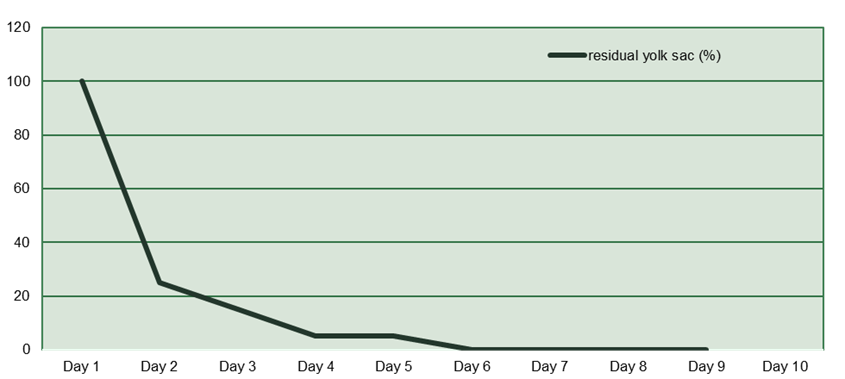
Figure 1. Residual yolk weight in relation to hatch (%) during the first days of life of chicks fed protein-deficient pre-starter diets (adapted from Svennen et al., 2010)
These interesting findings suggest that newly hatched chicks might be more sensitive to a shortage in protein than in lipids or carbohydrates. The impact that dietary protein availability has during the first days of the chick's life is so significant, most likely because the efficiency of protein digestion is lower than that of lipids and carbohydrates in the first days after hatch (Noy and Sklan, 1995). In this sense, it is well known that the activity of trypsin, the enzyme responsible for the digestion of dietary protein, is practically non-existent during the first four days of life, increasing progressively until day 10 (Figure 2).
.
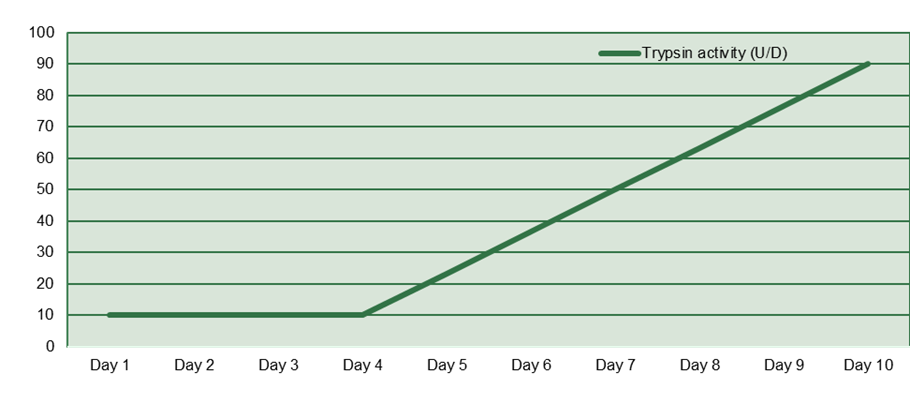
Figure 2. trypsin activity in small intestine (U/d) after hatch (adapted from Noy and Sklan, 1995)
If we overlap the two previous figures, it is clearly observed that there is a time window in the first four days of life, in which the chicks have a high risk of not receiving enough protein and amino acids to be able to carry out the adequate development of their gastrointestinal tract (Figure 3). If the small birds have run out of protein from the yolk sac and do not obtain the necessary supply of protein through their diet, they will be forced to use their own muscle protein to satisfy the requirements for the development of vital organs, which are priority. Such a deficiency in protein intake during the first four days of life may further exacerbate the heterogeneity of the chicks when they arrive at the farm, prolonging it over time. On the contrary, enough dietary protein easily available by the young chicks will help alleviate the lack of homogeneity within the same flock. Therefore, the focus for the requirements of newly hatched chicks should be on dietary protein sources.
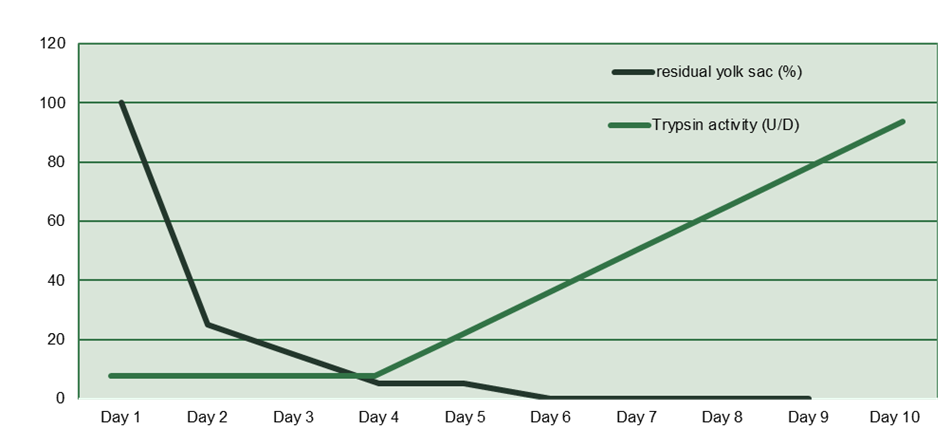
Figure 3. Residual yolk weight and trypsin activity during the first days of life of chick
Soybean meal is undoubtedly the ideal source of protein to meet the amino acid requirements of chickens, but its trypsin inhibitors (TI) content may further aggravate the already poor availability of protein and amino acids during the first days of life. In addition, other soy antinutritional factors (such as galacto-oligosaccharides and beta-conglycinin) may trigger intestinal imbalances and disorders that further impair the use of dietary protein (Blanch 2020 a, b). The crux of the matter is not to give up the desirable amino acid profile of soybean meal but minimizing the content of TI and other soy anti-nutritional factors in the pre-starter and starter diets of broilers as much as possible. The biotechnological treatment of soybean meal with enzymes has turned out to be an excellent procedure for obtaining a clean protein source, with a suitable profile of amino acids, ideal for feeding young chicks.
The substitution of part of the normal soybean meal with this type of enzymatically treated soy protein (ESP) substantially reduces the content of soy antinutritional factors in the pre-starter and starter feed, in addition to favoring protein kinetics in the intestine, accelerating its use by young chicks. The effect of early supplementation of ESP and its route of application for broiler chicks has been studied by Omede et al. 2019). In this study, the route of application was as a paste (mixed with water, approximately 50%) during the first five days of life (see picture) and / or the inclusion in the feed until 10 days of age. From day 11 of life until the end of the study (35 days), all experimental groups received the same diets.
.
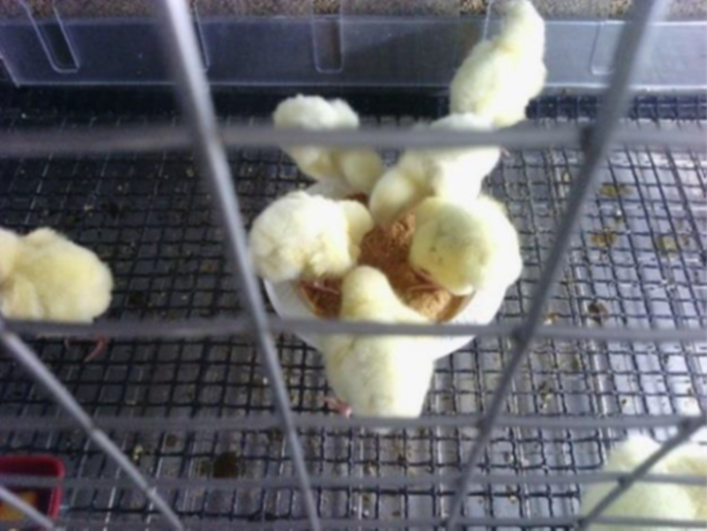
Administration of enzymatically treated soy protein as a paste to chicks from 0 to 5 days of age
On day 35, birds on control diet (without ESP) had significantly (P < 0.05) lower body weight gain and higher FCR than the treatment groups with feed intake unaffected (Table 1).
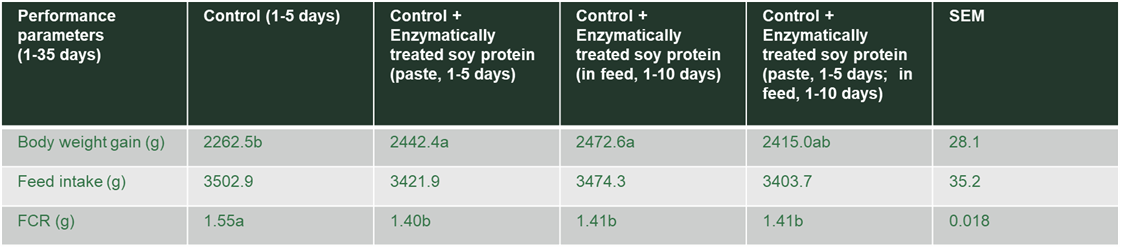
Table 1. Carryover effect of ESP when fed after hatch. Mean values in the same row with different letters are significantly different (p<0.05)
Early supplementation of ESP in feed and as a paste is beneficial to growth and feed efficiency in broiler chickens until the end of the production cycle. In addition, the ESP paste may be beneficial for use in in-hatchery or on-site early feeding systems.
References can be forwarded if requested
About HAMLET PROTEIN
